
60 years of IMS: 4 Round table discussions
13/01/2026
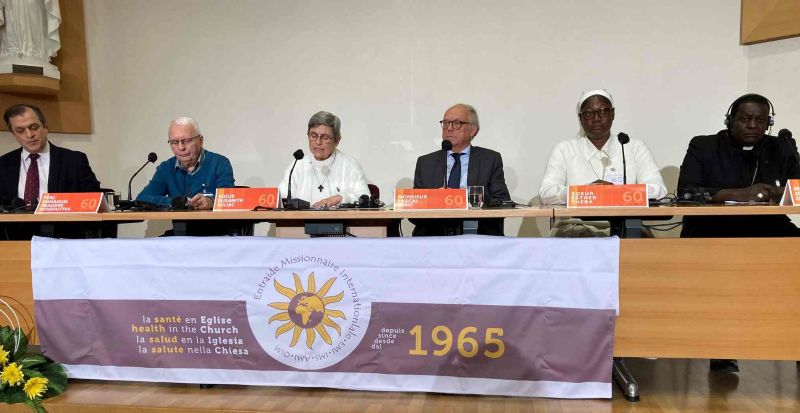
To mark its 60th anniversary, IMS organised a day of celebrations, which began with a round table discussion on social protection around the world. Father Meaudre, Sister Esther Thera, Monsignor Joseph Sagwe and Mr Pascal Beau honoured us with their participation in these discussions, with the kind assistance of KTO and journalist Mr Cyril Lepeigneux.
Father Meaudre
Head of Health Services for the Spiritans (Congregation of the Holy Spirit), Technical Advisor to IMS
The Spiritans are missionaries who have been working mainly in sub-Saharan Africa, the Indian Ocean islands, the Caribbean and South America since 1965. They co-founded IMS, which institutionalised mutual aid between missionaries from various institutes. Initially, financial concerns were at the centre of discussions, focusing on the contributions needed for the 1,200 confreres, 800 of whom were abroad. However, the Spiritans quickly realised the benefits of the EMI, such as assistance with unexpected hospitalisations or medical evacuations, which were necessary at a time when medical facilities were limited.
The IMS offered a certain guarantee regarding the health of missionaries, the reimbursement of medical expenses and facilitated surgical operations, in particular by organising medical evacuations. The institutes, particularly those for women, also contributed to improving health infrastructure and medical training. Today, IMS works with MSH International to manage these aspects. IMS promotes the dignity of every individual, regardless of their status or where they live. It encourages global solidarity and thanks those who continue this mission.
Sister Esther Thera
Daughter of the Immaculate Heart of Mary (Mali), IMS Administrator
Mali and Burkina Faso face significant challenges, such as rapid population growth, armed conflict, terrorism and limited resources.
The main health needs include the management of endemic diseases such as malaria, HIV, tuberculosis and dengue fever, as well as the monitoring of chronic diseases such as diabetes and hypertension. Mental health is also a major issue, with very limited services available. Epidemic prevention, the fight against malnutrition and maternal and child health are other key concerns.
With the growth of the young population, demand for health services is increasing. Although some infectious diseases are declining, new needs related to chronic diseases are emerging. Many challenges remain: limited access to care in rural areas, quality of care due to a lack of staff and equipment, as well as problems with drug supply and health system financing.
Progress has been made, such as improved access to technical care (radiotherapy, CT scans, etc.) and initiatives such as the creation of a research centre for sickle cell disease. Vaccination programmes have improved the health of vulnerable populations, but further efforts are needed.
IMS, present in Africa
Monsignor Joseph Obanyi Sagwe
Bishop of Kakamega (Kenya), IMS Administrator
Healthcare is improving in Kenya, particularly with the introduction of a new social protection scheme called the Social Health Insurance Fund, which aims to provide healthcare to all citizens at an affordable cost. However, this system faces several challenges, such as difficulties in paying contributions and repaying huge debts, while meeting the people’s expectations of the government.
The previous bishop of Kakamega, Monsignor Philip Sulumeti, was hospitalised, incurring high costs, even though they were partially covered by the IMS.
Currently, a priest in the diocese is in a similar situation, proof that healthcare management is a major concern for bishops, especially with an ageing population in several dioceses in Africa.
It is therefore necessary to pay attention to the health of members, as untreated health problems can lead to chronic conditions. The health of priests is thus crucial to the success of the Church’s mission. Finally, Jesus always gave importance to healing in his mission.
Superiors and bishops must be aware of the importance of health in the Church, the need to invest in their health, and the relevance of a social protection scheme. Health must be a priority in the Church’s mission in order to ensure its sustainability.
Mr Pascal Beau
President of the European Social Protection Observatory, founder of ESE (European Social Space) publishing house
The global health situation highlights key realities and challenges, particularly in the wake of the Covid-19 pandemic. The complexity of health issues varies significantly from one country to another. It should be noted that although 150 countries can provide reliable health statistics, 30 to 40 others lack accurate data, making it difficult to produce a comprehensive overview.
The pandemic has had a significant impact on mortality and life expectancy, with an average decline of 1.8 years. Despite considerable efforts by wealthy countries, disparities remain. While Africa has had relatively few cases of COVID, several diseases (such as AIDS and malaria) remain major concerns. Non-communicable diseases, such as coronary heart disease, diabetes and cancer, also represent a global challenge.
Strategies for managing infectious risks lack robustness. Globally, the role of the WHO is under discussion; in Europe, the HERA programme was recently created. Around 1.8 billion people have seen their health improve since 2023 thanks to various advances, and a global agreement on pandemics was also adopted in 2024, but there is still a long way to go.
Health challenges include the need to recognise the importance of health for sustainable socio-economic development, insufficient health funding in many countries, training for health professionals, and the urgent need for health education and vaccination. Climate and demographic issues, and the question of personal data in the context of AI, should not be overlooked.
Finally, a comprehensive but also local approach to health is necessary, as it is a human right. Cooperation, patient engagement and the use of science are essential to overcoming challenges. He emphasises the importance of re-evaluating health actions, which must always include an educational, preventive and civic dimension.